
Introduction
Polyoxymethylene (POM), commonly known as acetal or polyacetal, represents a specialized class of engineering polymer with exceptional mechanical properties. When processed into textile fibers, POM offers unique characteristics that address applications where conventional materials fail. Xinci's POM engineering yarn serves niche but critical markets requiring extreme chemical resistance, dimensional stability, and low friction coefficients.
Material Science Fundamentals
POM is a high-crystallinity thermoplastic polymer with distinctive properties: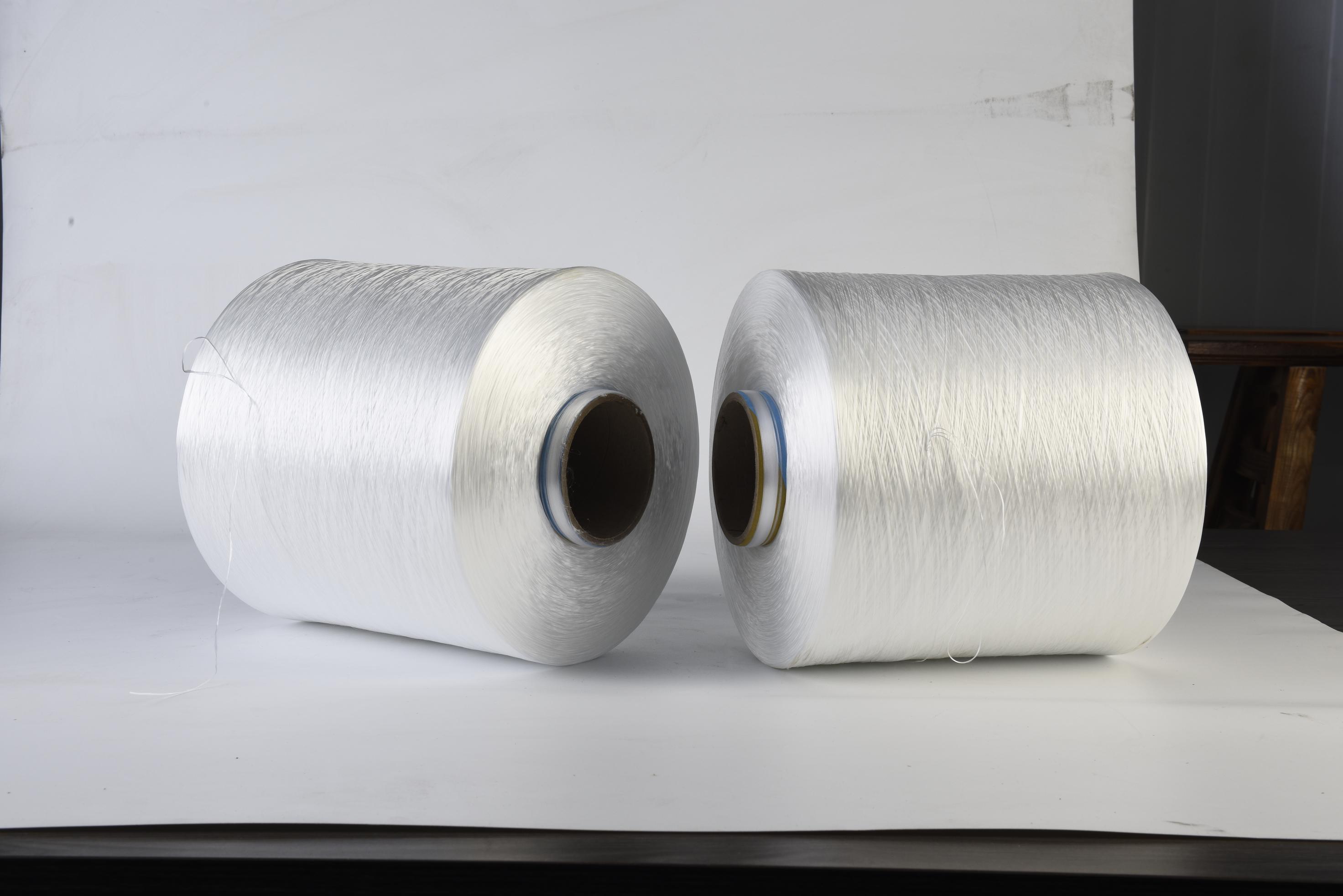
Exceptional Stiffness: POM fibers exhibit modulus values of 2.5-3.0 GPa, significantly higher than PP (1.5 GPa) or nylon (2.0 GPa), providing excellent structural rigidity.
Low Friction Coefficient: With a dynamic friction coefficient of 0.15-0.35 against steel, POM yarn is ideal for bearing surfaces, guide rails, and wear strips.
Chemical Resistance: POM resists organic solvents, fuels, and neutral chemicals, maintaining performance in aggressive industrial environments.
Dimensional Stability: Low moisture absorption (<0.2%) ensures minimal dimensional change across humidity variations, critical for precision applications.
Fatigue Resistance: POM withstands repetitive flexing and cyclic loading without cracking or degradation, outperforming metals in many dynamic applications.
Specialized Applications
Conveyor Systems: POM yarn woven into conveyor belts and guide tapes provides low-friction surfaces that reduce drive power requirements and extend system life.
Filtration Media: Precision-woven POM fabrics serve in chemical filtration applications where polyester or nylon would degrade.
Sealing and Gasketing: Braided POM packings and gaskets provide reliable sealing in pumps, valves, and rotating equipment handling corrosive media.
Medical Devices: POM's biocompatibility and sterilization resistance make it suitable for surgical sutures, catheter components, and implantable textile structures.
Automotive Components: Fuel system components, cable guides, and interior wear strips utilize POM yarn for chemical resistance and dimensional precision.
Manufacturing Challenges and Solutions
POM fiber production presents unique technical challenges:
Thermal Sensitivity: POM degrades at temperatures above 230°C, requiring precise temperature control during extrusion. Xinci employs advanced cooling systems and residence time optimization to prevent thermal degradation.
Molecular Weight Control: Achieving optimal molecular weight for fiber applications requires careful polymerization parameter management. Xinci's process control systems maintain tight molecular weight distributions.
Drawing Optimization: POM requires specialized drawing protocols to achieve optimal crystallinity without brittleness. Xinci has developed proprietary drawing sequences that maximize strength while maintaining adequate toughness.
Quality Verification: Each production lot undergoes comprehensive testing including tensile properties, friction coefficient measurement, and chemical resistance verification.
Market Position and Future Development
Xinci's POM yarn occupies a specialized position in the technical textiles market:
Premium Positioning: Higher cost than commodity fibers is justified by superior performance in critical applications where failure is not an option.
Technical Partnerships: Xinci collaborates with equipment manufacturers to develop application-specific POM textile solutions.
Research Investment: Ongoing development focuses on POM nanocomposites and blended structures that combine POM's mechanical properties with other functional characteristics.
Sustainability Initiatives: Bio-based POM development programs explore renewable feedstocks for specialized engineering applications.
Conclusion
POM engineering yarn represents the frontier of technical textile materials, solving problems that conventional fibers cannot address. Xinci's expertise in POM fiber production and application engineering provides customers with reliable solutions for their most demanding textile challenges.