
Color starts inside the polymer
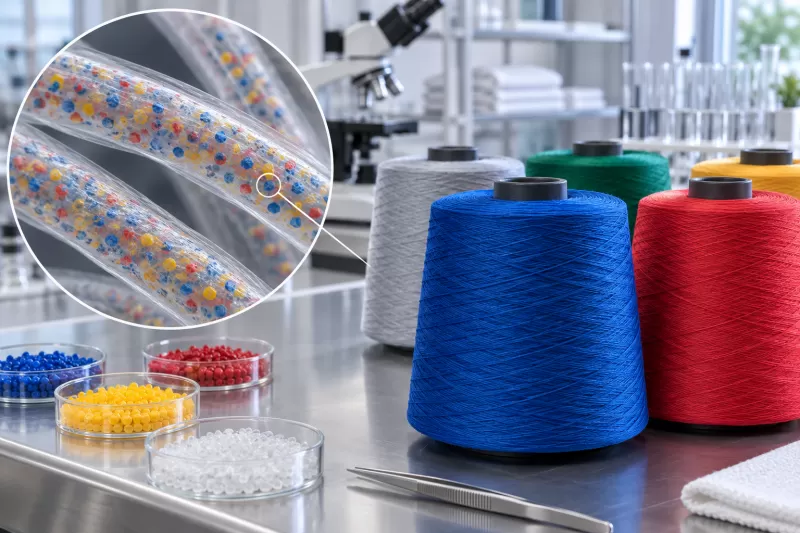
In solution dyeing, pigment is introduced before the filament is formed. The color therefore becomes part of the yarn rather than a coating applied after spinning. For industrial textiles, this approach can improve color durability and remove a separate wet-dyeing stage, while also supporting repeatable programs once a color formula has been approved.
Colorfastness is application-specific
A high grade in one test does not guarantee performance in every environment. Outdoor furniture, geotextiles, bags and narrow fabrics may face different combinations of sunlight, abrasion, chemicals and cleaning agents. Buyers should define the relevant test method, exposure time and acceptance level. For outdoor use, UV stabilization and color selection need to be evaluated together.
Control the approved color
A digital Pantone reference is a useful starting point but not the final approval standard. Screens and lighting change how colors appear. The safer process is to approve a physical lab dip or yarn sample under agreed lighting, then retain a master sample with an acceptable tolerance. Package-to-package and lot-to-lot consistency should be included in the purchasing specification.
Information that speeds sampling
Provide polymer type, denier, filament count, luster, color reference, fastness target, end use and forecast volume. Mention any additive package, regulatory requirement or restricted substance list. Clear inputs reduce repeated color matching and help the producer select an economical minimum order and production route for the program.