
Strength is only the starting point
Safety harness webbing and fire-hose reinforcement experience repeated bending, rubbing and load cycles. High-tenacity nylon is attractive because it combines strength, toughness and abrasion resistance, but a single breaking-force value cannot describe the whole service life. Elongation, fatigue behavior, yarn uniformity and performance after conditioning are also important.
Design for the complete construction
The yarn operates as part of a woven structure, coating system or finished assembly. Twist, denier, filament count and weave density influence load distribution and abrasion. In hoses, compatibility with the inner lining and outer coating matters. In harnesses, hardware contact points, edge wear and sewing details can become the critical zones even when the base webbing is strong.
Moisture and heat need attention
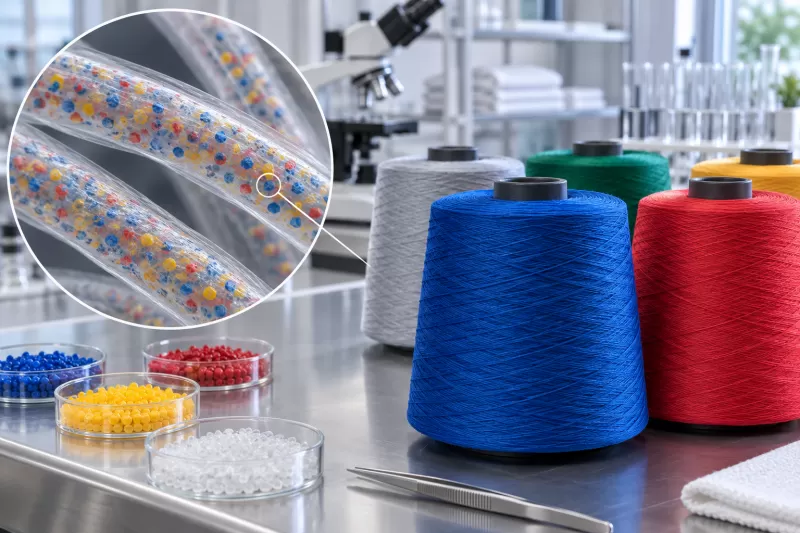
Nylon can absorb more moisture than polypropylene or polyester, which may change dimensions and mechanical readings. Heat exposure, chemicals and sunlight can also affect long-term performance. Buyers should define conditioning procedures and aging tests that reflect the real application. Outdoor products may require a dedicated stabilization package and suitable colorants.
Qualification should happen at assembly level
Begin with yarn certificates and representative samples, then weave and test the actual construction. Confirm traceability, lot consistency and change-control procedures before volume orders. Final safety compliance belongs to the finished harness or hose, so the component specification and finished-product test plan must support each other.